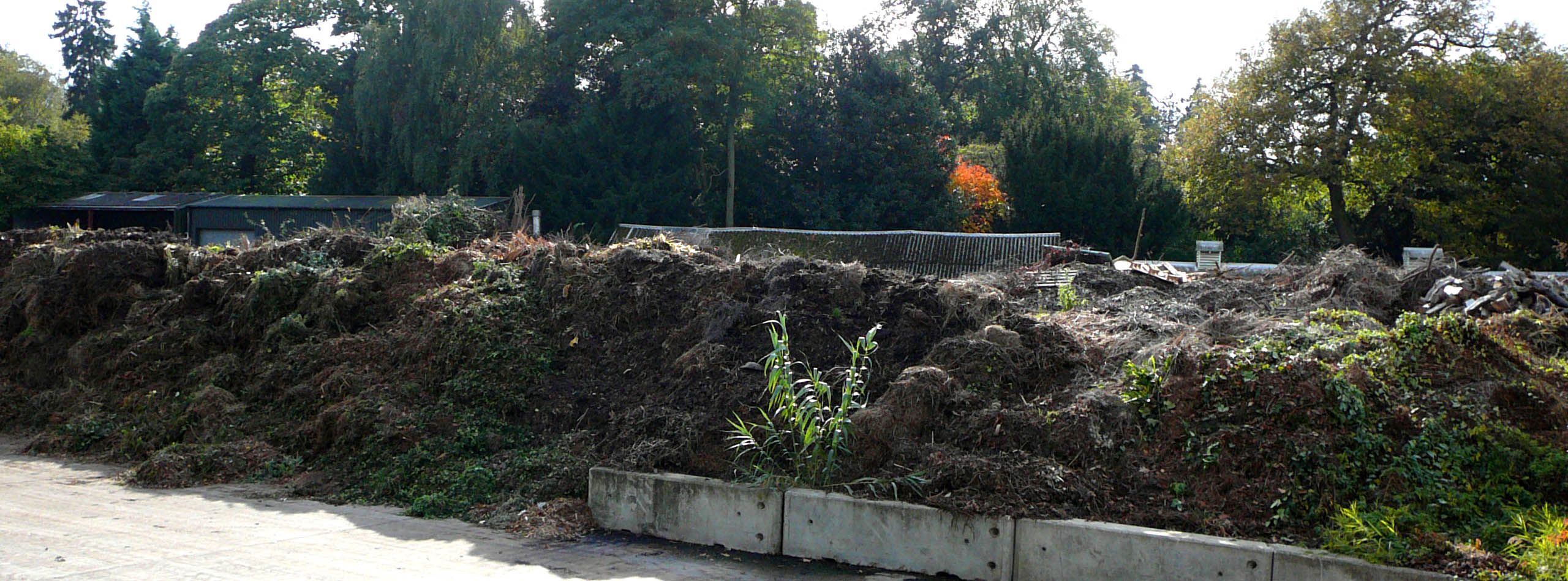
Composting converts kitchen scraps and garden waste into a soil amendment that improves drainage in clay soils, increases water retention in sandy soils, and adds a slow-release source of nutrients. For Canadian gardeners, the main variable is winter: decomposition slows or stops entirely when temperatures drop below 0°C, and the approach that works in a mild-winter climate needs adjustment for a Prairie or Great Lakes winter.
Three composting methods are practical for most Canadian backyards: cold composting, hot composting, and vermicomposting (worm bins). Each involves different levels of effort, produces compost at different rates, and handles winter conditions differently.
Understanding the carbon-to-nitrogen ratio
Decomposition is driven by microorganisms that need both carbon (from "brown" materials) and nitrogen (from "green" materials). A carbon-to-nitrogen ratio somewhere around 25:1 to 30:1 is generally considered optimal for active decomposition, though exact ratios are difficult to measure in practice. The practical rule: aim for roughly equal volumes of browns and greens, and adjust based on whether the pile smells (too much nitrogen) or fails to heat up (too much carbon).
| Brown (carbon-rich) | Green (nitrogen-rich) |
|---|---|
| Dry leaves | Vegetable scraps |
| Straw | Fruit trimmings |
| Cardboard (uncoated, torn small) | Fresh grass clippings |
| Wood chips | Coffee grounds |
| Dry plant stalks | Tea leaves |
| Paper (unbleached) | Fresh garden trimmings |
Do not add meat, fish, dairy, or cooked food to an outdoor compost pile — these attract wildlife. In Canada, this includes raccoons, skunks, and in some regions, bears. A covered, enclosed bin reduces this risk for kitchen scraps.
Cold composting
Cold composting is the lowest-effort approach: materials are added to a bin or pile as they become available, with minimal turning or management. Decomposition proceeds at whatever rate the ambient temperature allows — fast in summer, slow in autumn, essentially stopped from December through March in most of Canada.
Setup
A three-sided enclosure of at least 0.9 m × 0.9 m provides adequate volume for decomposition to occur. Many municipalities across Canada sell subsidized compost bins — Toronto, Edmonton, and Vancouver's regional districts have all run such programs in past years. Check with your local municipality before purchasing.
Layer materials as you add them: a layer of browns, a layer of greens, repeat. Keep the pile moist (roughly the consistency of a wrung-out sponge) but not waterlogged. In summer, covering the pile or positioning it in partial shade reduces moisture loss.
Winter management in Canada
Cold composting piles freeze solid in most Canadian zones from December through February. This is not a problem — the pile simply resumes decomposing when temperatures rise in spring. Continue adding kitchen scraps during winter; they will decompose with the rest once conditions improve. Some gardeners keep a small bucket of brown material (dry leaves collected in autumn) indoors to layer with kitchen scraps added during winter months.
Cold composting typically produces finished compost in 6–18 months depending on what is added, how often the pile is turned, and seasonal temperatures.
Hot composting
Hot composting generates heat through the activity of thermophilic (heat-loving) microorganisms when the pile is large enough, properly balanced, and turned frequently. Internal temperatures can reach 55–65°C, which kills most weed seeds and many pathogens.
Requirements
- Volume: A minimum of approximately 1 m³ is needed to generate and retain sufficient heat. Smaller piles dissipate heat too quickly.
- Moisture: The pile should be consistently moist throughout — dry materials will not decompose; waterlogged material becomes anaerobic and smells.
- Turning: Active hot composting requires turning the pile every 3–5 days. This re-introduces oxygen and moves cooler outer material to the hotter interior.
- Balanced inputs: Adding a large quantity of a single material (e.g., a full bin of grass clippings) creates imbalance. Layer and mix as you add.
Seasonal limitations in Canada
Hot composting works well from May through October in most Canadian zones. In winter, even a well-maintained pile will lose its heat as ambient temperatures drop. One practical approach is to complete a hot-composting cycle in late September and early October, harvesting the finished compost before freeze-up, then switching to cold composting through winter.
Hot composting can produce finished compost in as little as 4–8 weeks under optimal conditions in summer.
Compost thermometers: A long-probe thermometer (45–60 cm shaft) is useful for monitoring a hot compost pile. Target the range of 55–65°C for 3+ days to ensure pathogen reduction. Sustained temperatures above 70°C can kill beneficial microorganisms and slow decomposition.
Vermicomposting (worm bins)
Vermicomposting uses Eisenia fetida (red wigglers), not the earthworms found in garden soil, to break down organic matter. A worm bin can be maintained indoors year-round, making it the only method that continues to function through a Canadian winter without modification.

Setup
A basic worm bin can be built from a plastic storage container (40–60 L) with drainage holes and a loose-fitting lid. Bedding materials — shredded newspaper, cardboard, coconut coir — are moistened and placed in the bin, and worms are added. Start with roughly 0.5 kg of worms (approximately 500 worms) per bin.
Feed worms vegetable and fruit scraps, coffee grounds, and tea leaves. Avoid citrus, onions, and garlic in large quantities as these can stress the worms. Bury scraps under the bedding rather than leaving them on the surface to reduce odour and fruit flies.
Harvesting vermicompost
Worm castings (vermicompost) accumulate over 2–4 months. To harvest, push finished compost to one side of the bin and place fresh bedding and food on the other. Over 1–2 weeks, worms migrate toward the food. The finished compost side can then be removed with minimal worm loss.
Vermicompost is nutrient-dense and can be applied directly to beds at a rate of 1–2 cm per season, or used as a component in potting mixes.
Applying compost to vegetable beds
Finished compost — dark, crumbly, and earthy-smelling — is typically incorporated into beds in spring before planting or applied as a surface mulch during the growing season.
General application rates vary by soil condition. For beds being established on poor soil, 5–10 cm worked in to 20–30 cm depth is common in the first year. For established beds in reasonable condition, a 2–4 cm surface application per season maintains organic matter levels without over-applying.
Compost is not a complete fertilizer — it adds organic matter and micronutrients but generally contains lower concentrations of nitrogen, phosphorus, and potassium than synthetic fertilizers. For heavy-feeding crops like corn, squash, and tomatoes, supplemental nitrogen sources may still be needed.

